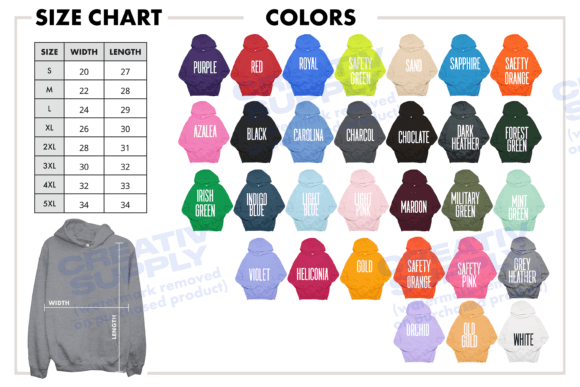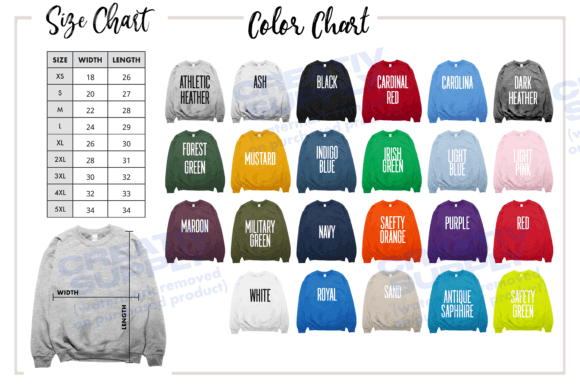
Reviewing the Gildan 18500 Hoodie Color Chart for Etsy
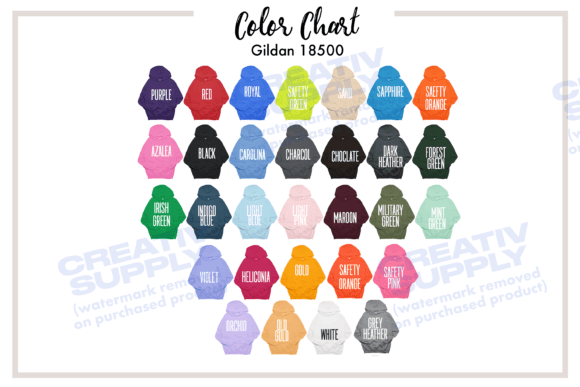
As a designer who has spent years digitizing patterns and managing small batch production, I have learned that presentation is often just as critical as the stitching itself. When we talk about Color Chart for Gildan 18500 Hoodie Etsy, we are not discussing a traditional machine embroidery design with satin stitches or fill areas. Instead, we are evaluating a vital piece of digital infrastructure for the modern Etsy seller and craft entrepreneur. This product is a high-resolution visual asset, specifically a mockup tool, designed to help you showcase your actual embroidery work on one of the most popular blanks in the industry.
The First Impression: Clarity Over Clutter
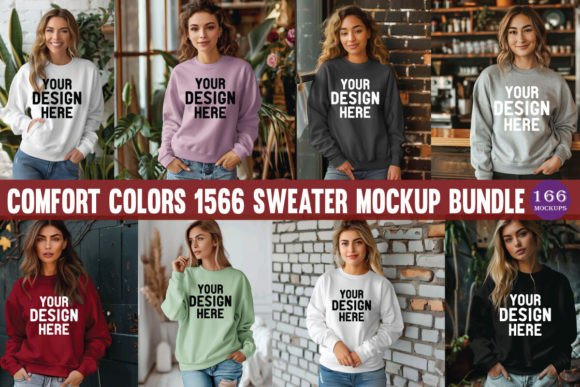
My initial review of this Graphics file focuses on its utility. The description states that the image is logo-free, completely blank, and ready for store use. For a professional, this is the most important feature. Many free or low-quality mockups come with watermarks, distracting shadows, or pre-existing designs that clash with your brand aesthetic. A clean, 300 dpi high-resolution JPEG allows you to maintain full control over the visual narrative. When I open a file like this, I am looking for sharp edges, accurate color representation of the fabric, and realistic lighting that does not distort the shape of the garment.
The mood this asset creates is one of professionalism. It signals to your potential customers that you take pride in your handmade product. Whether you are selling Hoodies Sweatshirts or using the chart to plan thread combinations, the clarity of the base image determines how well your digital overlays will blend. A blurry or pixelated base makes even the most intricate applique design look amateurish. This file, by specification, avoids those pitfalls.
Real-World Application in the Design Studio
Let us look at a practical scenario. Imagine you are preparing a new line of custom apparel for the holiday season. You have digitized a beautiful floral motif intended for sweatshirt embroidery. Before you stitch a single thread on expensive Gildan 18500 blanks, you need to visualize how different thread colors will pop against the hoodie’s fabric. This is where the Color Chart for Gildan 18500 Hoodie Etsy becomes indispensable.
I use these blank mockups to test contrast. If I am working with a dark navy hoodie, I can digitally overlay my design using various thread colors to see if a light grey running stitch outline gets lost or if a bright yellow fill stitch stands out too aggressively. This pre-visualization saves time and materials. It allows me to present options to clients before committing to production. For an Etsy seller, being able to show a customer exactly how their personalized gift will look on a specific garment increases conversion rates significantly. It builds trust because the buyer sees a realistic representation, not just a floating graphic.
Enhancing Visual Appeal and Brand Consistency
Consistency is key in building a recognizable brand. When your shop listings all feature high-quality, consistent lighting and angles, your store looks cohesive. Using a standardized blank like this ensures that every listing photo has the same professional baseline. This affects customer trust and perceived value. A well-presented finished product image suggests that the physical item will be equally well-crafted. It elevates the perceived quality of your craft business.
Furthermore, this asset is not limited to hoodies. While the title specifies the Gildan 18500, the principles of using high-resolution blank mockups apply across your inventory. You can adapt your workflow for tote bags, caps, and baby items. However, for this specific product, the focus is on the heavy, comfortable feel of the Gildan 18500. The mockup should reflect the weight and drape of that specific fabric. If the digital shadowing looks too light or the fabric texture appears too thin, it misrepresents the product. A good review checks for these nuances. Does the digital representation match the physical reality of the custom apparel you are selling?
Practical Considerations for Embroidery Designers
While this is a digital asset, its use is deeply tied to the physical realities of embroidery. Here are my notes on how to leverage this tool effectively while keeping technical constraints in mind.
- Check Resolution and Scaling: The file is 300 dpi, which is excellent for print and high-quality web display. Ensure you do not stretch the image beyond its native dimensions, as this will introduce pixelation that ruins the professional look.
- Thread Color Accuracy: Remember that screens vary. Use the mockup to check contrast and layout, but always verify your actual thread colors against the physical fabric swatch. Digital colors can be misleading, especially with metallics or variegated threads.
- Stitch Density Awareness: When placing your design digitally on the mockup, consider the stitch density. A dense design might pull the fabric in real life, creating puckering that a flat digital image won't show. Use the mockup for placement, but rely on test stitches for texture assessment.
- Hoop Size Visualization: Use the blank canvas to visualize different hoop size placements. Centered chest logos versus left-chest emblems create different vibes. The blank nature of this file allows you to experiment freely without visual clutter.
- Fabric Texture and Lighting: Pay attention to how the light hits the folds in the mockup. Your digital design should follow these contours slightly if you are advanced in Photoshop, or at least respect the lighting direction so it doesn't look like it is floating unnaturally.
Where to Use Caution
Even with a perfect mockup, there are limitations. Do not rely solely on the digital preview for complex issues like stretchy fabric distortion or how a design sits on a curved surface like a hood. The Gildan 18500 is a sturdy cotton blend, but it still moves. Also, be mindful of dark fabric challenges. A mockup might show a white design clearly, but in reality, you may need an underlay or a different stabilizer approach to prevent the dark fabric from showing through the stitches. Always test on scrap fabric first.
Final Verdict for the Small Shop Owner
The Color Chart for Gildan 18500 Hoodie Etsy is a strategic tool rather than a decorative one. It is essential for anyone serious about selling commercial embroidery products online. It bridges the gap between the digital file you create and the physical item the customer receives. By providing a clean, high-resolution, and logo-free base, it empowers you to create compelling printable mockup style listings that drive sales.
For the hobbyist or the established small shop product creator, this asset simplifies the marketing process. It removes the need for expensive photo shoots for every color variation. Instead, you can focus on your craft—perfecting your satin stitch edges and choosing the right stabilizer—while using this graphic to handle the heavy lifting of visual presentation. Just remember to confirm licensing terms for commercial use if you are reselling the mockup itself, though typically these are for showcasing your own finished goods. Always double-check the specific license provided with your download.
In conclusion, integrating this type of high-quality digital asset into your workflow is a mark of a mature design practice. It shows you understand that selling embroidery is not just about the needle and thread, but about the entire customer experience, starting with the first click on your store. Use it to refine your offerings, clarify your vision, and present your personalized gift items with the confidence they deserve.